





Celebrity Media Editorial Board | September 21, 2026 | This article is a news commentary.
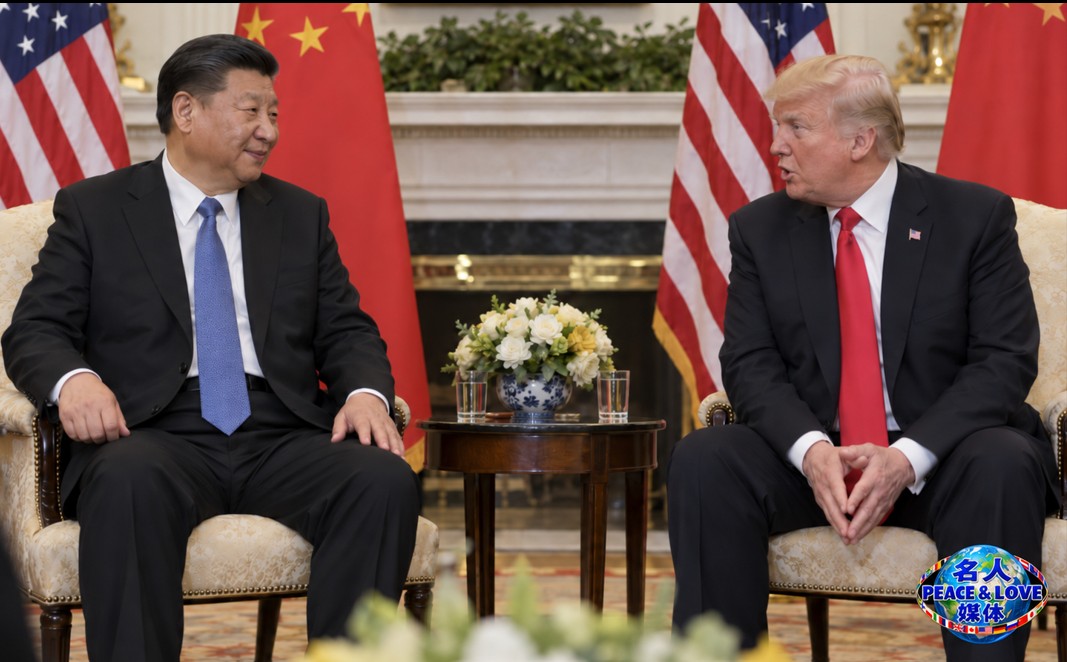
Photo Caption: An illustrative image of Xi Jinping and Donald Trump meeting at the White House.
Disclosure: This image was generated by ChatGPT AI and is not an actual photograph of a real news event.
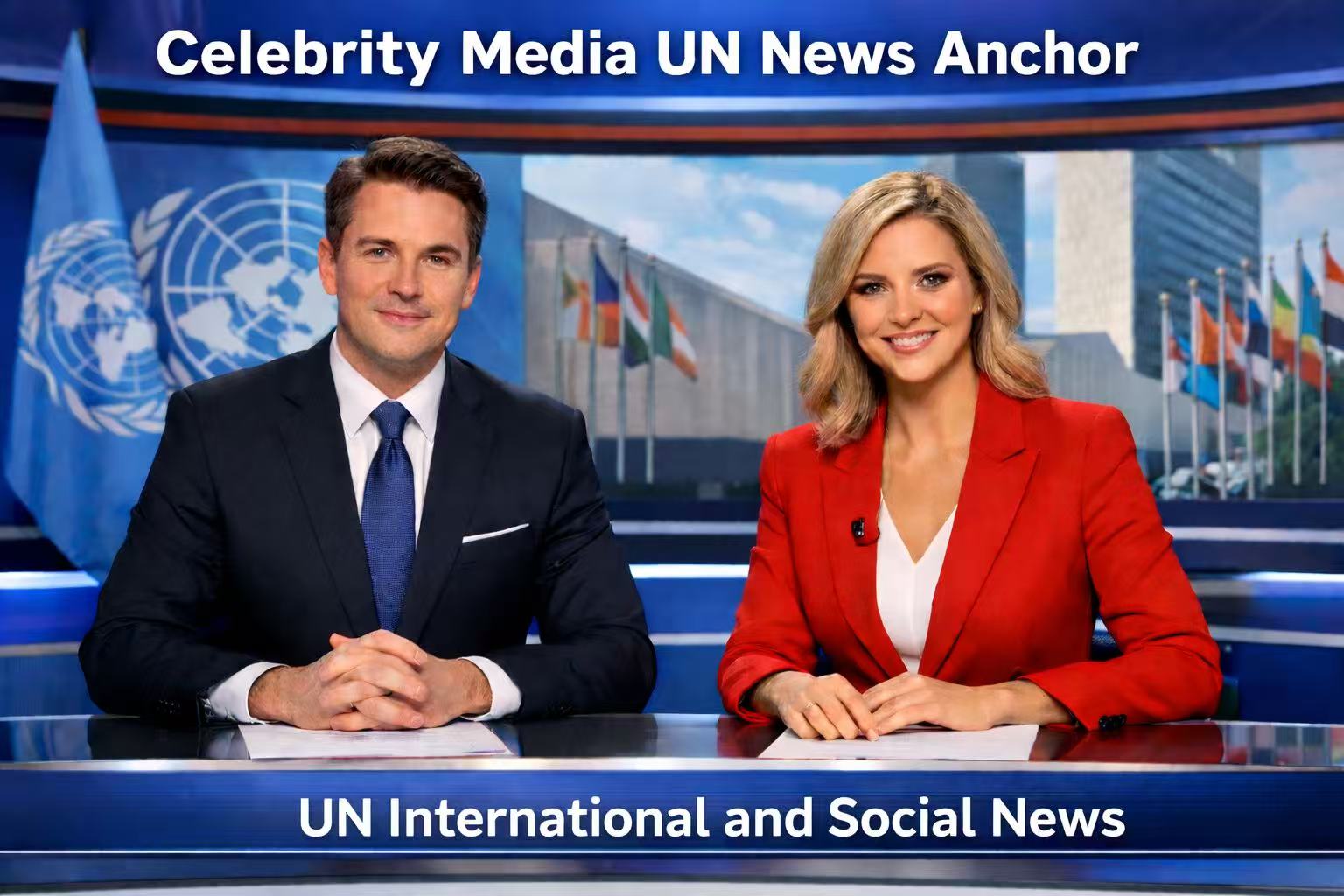
The audio is an approximately three-minute narrated version of this news commentary.
【Celebrity Media International News Commentary】On September 21, 2026, local time, the High-Level Week of the 81st Session of the United Nations General Assembly was underway in New York, with the General Debate scheduled to begin on September 22. Meanwhile, China’s Ministry of Foreign Affairs announced the same day that Chinese President Xi Jinping, at the invitation of U.S. President Donald Trump, would pay a state visit to the United States from September 23 to 25. Reuters reported that Xi would not travel to New York to participate in the high-level activities of this year’s UN General Assembly, instead placing the political focus of his U.S. visit on Washington, where he is expected to hold a China-U.S. leaders’ summit with Trump.
Two diplomatic scenes are unfolding in the same week: on one side is multilateral diplomacy centered on the United Nations; on the other is direct communication between the leaders of China and the United States. It is precisely this convergence in timing that has once again drawn attention to a concept that is not new, but has repeatedly returned to international political discussion in recent years — “G2.”
Why Does the UN General Assembly and the China-U.S. Summit Taking Place in the Same Week Revive the “G2” Discussion?
The so-called G2 is not a formal international organization, nor does it have a fixed membership structure, regular meeting mechanism, or international legal status comparable to the G7 or G20. Rather, it is a concept used to examine the structure of global power: when the United States and China exercise enormous influence over the global economy, trade, technology, finance, security, and supply chains, interactions between the two countries often generate consequences that extend far beyond their bilateral relationship.

What makes this year particularly noteworthy is that the China-U.S. leaders’ summit coincides with the United Nations High-Level Week. New York symbolizes the framework of multilateralism — a platform where countries, large and small, can express their positions through the United Nations. Washington, by contrast, reflects the logic of direct consultation between major powers — where some of the most sensitive issues with significant global spillover effects may require direct communication at the highest levels of China and the United States.
Therefore, this summit does not prove that “G2 has already taken shape,” but it may indeed strengthen the G2 discussion in terms of international perceptions and political narratives. At a time when world leaders are gathering in New York, the leaders of China and the United States are meeting directly in Washington to discuss trade, artificial intelligence, critical minerals, supply chains, security, and geopolitical issues. This naturally raises a broader question: are China and the United States gradually developing a more established form of major-power coordination?
Trump Has Used the Term “G2,” but China Has Not Formally Accepted Such a Framework
One direct reason the concept of “G2” has regained attention in 2026 is that Trump publicly used, or revived, the term during his interactions with Xi earlier this year. Some U.S. media interpreted this as a more explicit acknowledgment by Washington of China’s global standing, sparking renewed debate over whether China and the United States might increasingly address major international issues as the world’s two leading powers.
However, it is essential to distinguish between the political language used by an American president and the formal establishment of an institutionalized G2 framework between the two countries. To date, the Chinese government has not announced its acceptance of a G2 structure in which China and the United States jointly dominate world affairs. On the contrary, China’s recent public diplomatic statements continue to emphasize multilateralism, the role of the United Nations, and a “multipolar world.”
This suggests that China and the United States may increasingly recognize each other’s importance, but that does not mean they have reached a consensus on the idea of “two countries jointly managing the world.” Europe, India, ASEAN, Russia, Brazil, the Middle East, and the broader Global South all have their own independent interests, strategic priorities, and international influence. The importance of the China-U.S. relationship does not automatically mean that these countries would accept decisions made by two powers on behalf of the entire international community.
A More Likely Scenario: “De Facto G2 Influence” Coexisting With a Multipolar World
If G2 is understood as a formal international order, the available evidence is clearly insufficient. But if it is understood to mean that “China-U.S. relations have an unusually large structural impact on global affairs,” then elements of a de facto G2 dynamic are already quite visible.
Global trade rules, advanced semiconductors, artificial intelligence, critical minerals, financial markets, climate governance, supply-chain security, and numerous regional security issues are difficult to address without taking China and the United States into account. When China-U.S. relations deteriorate sharply, the effects often spread rapidly across global markets and other countries. Conversely, when the two countries establish stable arrangements in certain areas, those agreements can also generate significant international spillover effects.
But this does not necessarily lead to a simple “bipolar world.” A more realistic picture may be one in which China and the United States, as two of the world’s most influential powers, engage in direct coordination on certain critical issues, while the European Union, India, Russia, Japan, ASEAN, Brazil, and other forces in the Global South continue to expand their own bargaining power. In other words, the future international system may simultaneously display two characteristics: “special China-U.S. influence” and “multipolarity.”
What Matters Most About the Summit Is Not the Label, but Whether Competition Can Be Effectively Managed
From this perspective, the most important aspect of this week’s China-U.S. summit is not whether the two sides use the term “G2,” but whether they can establish stable, sustainable, and predictable channels of communication.
There is clear competition between China and the United States. Trade and industrial policies remain sources of friction; artificial intelligence and advanced technologies are areas of strategic competition; critical minerals and supply chains involve economic security; and the Taiwan issue remains one of the most sensitive issues in the bilateral relationship. At the same time, the two countries remain deeply interconnected through the global economy and industrial supply chains, making it impossible simply to remove the other from the international system.
This makes the “effective management of competition” an important indicator for assessing the future direction of China-U.S. relations. Managing competition does not mean eliminating disagreements, nor does it require either side to abandon its own position. Rather, the key questions are whether both sides maintain sufficient crisis-communication channels, whether they can reduce the risk of miscalculation, whether mechanisms can be established to prevent confrontation from escalating, and whether space for cooperation can be preserved in areas where common interests exist.
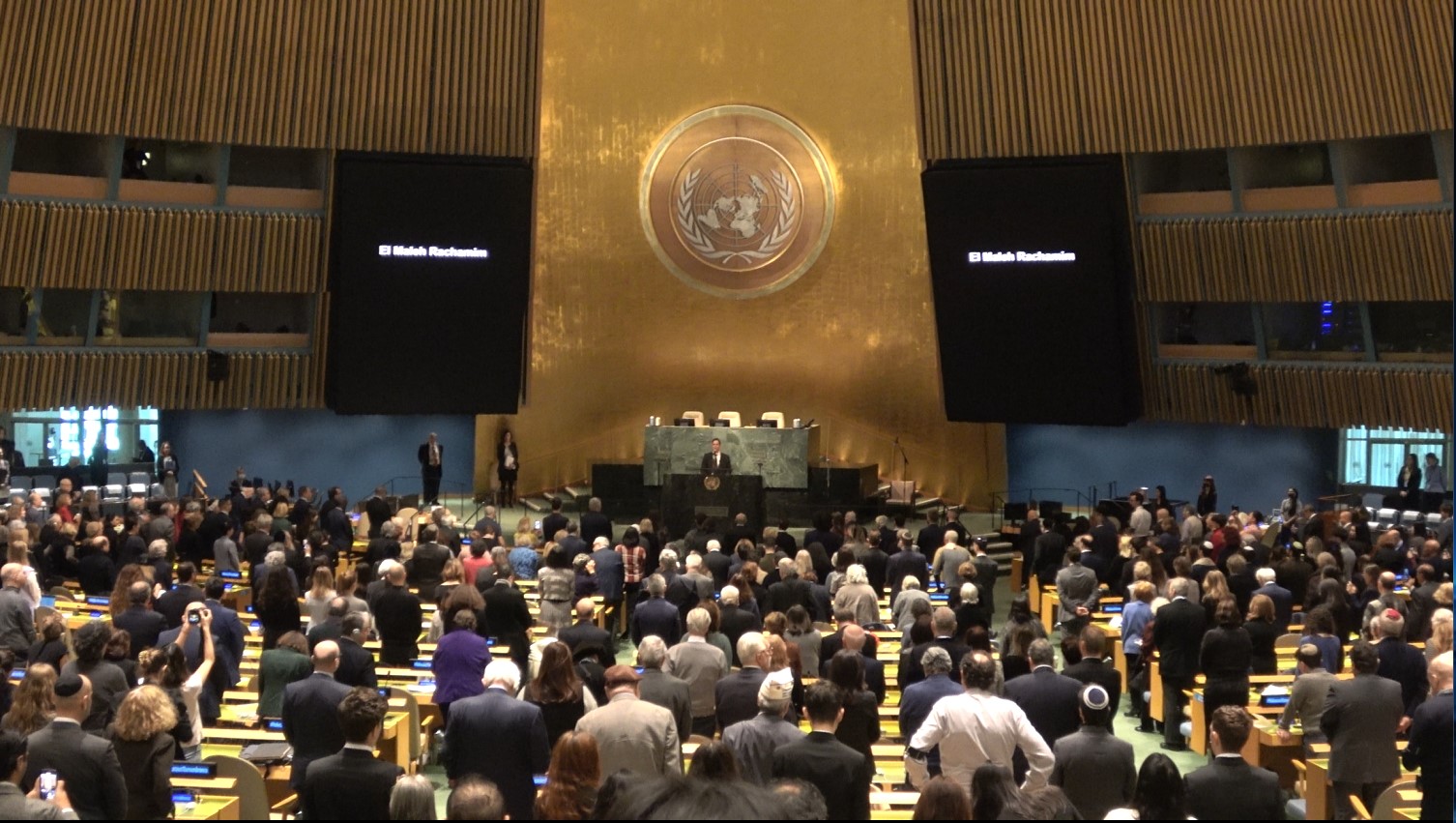
The United Nations Has Not Been Replaced, and the China-U.S. Summit Cannot Be Replaced by Multilateral Diplomacy
Xi Jinping’s decision not to participate in the UN General Assembly’s high-level activities in New York and instead meet with Trump in Washington could easily be given the symbolic interpretation that “multilateralism is giving way to major-power politics.” From an institutional perspective, however, such a conclusion would still be premature.
The United Nations provides a platform for global legitimacy and multilateral consultation, while China-U.S. leaders’ diplomacy addresses the most direct and sensitive issues between the two major powers. The former cannot replace bilateral crisis communication between major powers, while the latter cannot replace the institutional channels that the United Nations provides for the overwhelming majority of the world’s countries.
New York and Washington, therefore, do not represent a simple either-or choice. Instead, they illustrate the dual reality of today’s international order: the world continues to require multilateral institutions, while at the same time it cannot avoid the direct relationship between China and the United States.
Celebrity Media Perspective
The close timing of this China-U.S. leaders’ summit and the United Nations High-Level Week will indeed further intensify discussion about G2, but it does not mean that G2 has been formally accepted by China, the United States, or the international community. A more precise assessment is that China and the United States have an increasingly visible special major-power relationship and an extraordinary degree of global influence, but this reality remains embedded within an international system that is becoming both more multipolar and more multilateral.
Whether G2 ultimately becomes a reality is not the most important question. What truly matters is whether China and the United States can remain rational amid competition, maintain dialogue despite their differences, and pursue genuine cooperation in areas where cooperation is possible. Effectively managing competition, avoiding conflict, and expanding cooperation between China and the United States are important conditions for maintaining global peace and stability, and represent a direction that the international community broadly hopes to see.