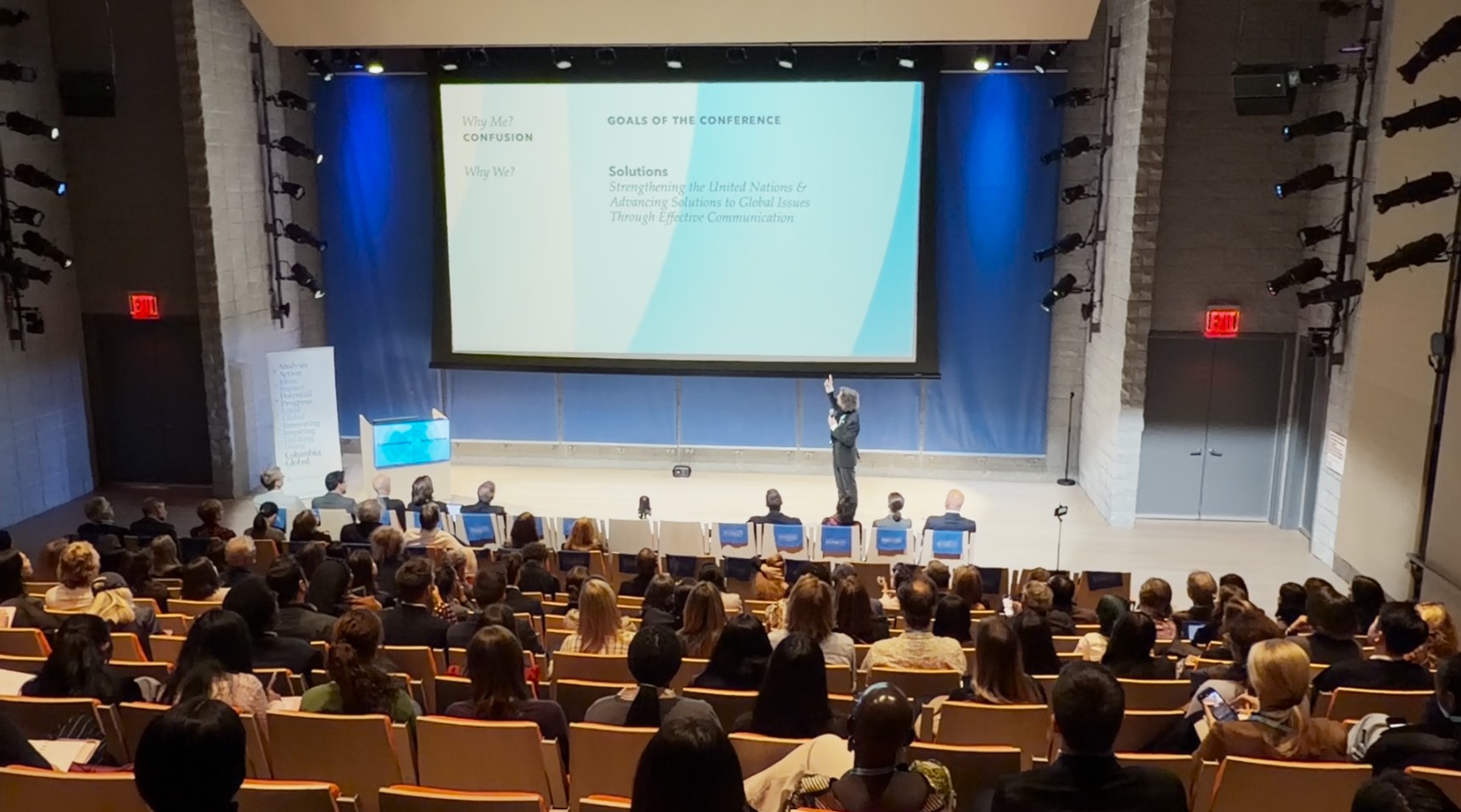


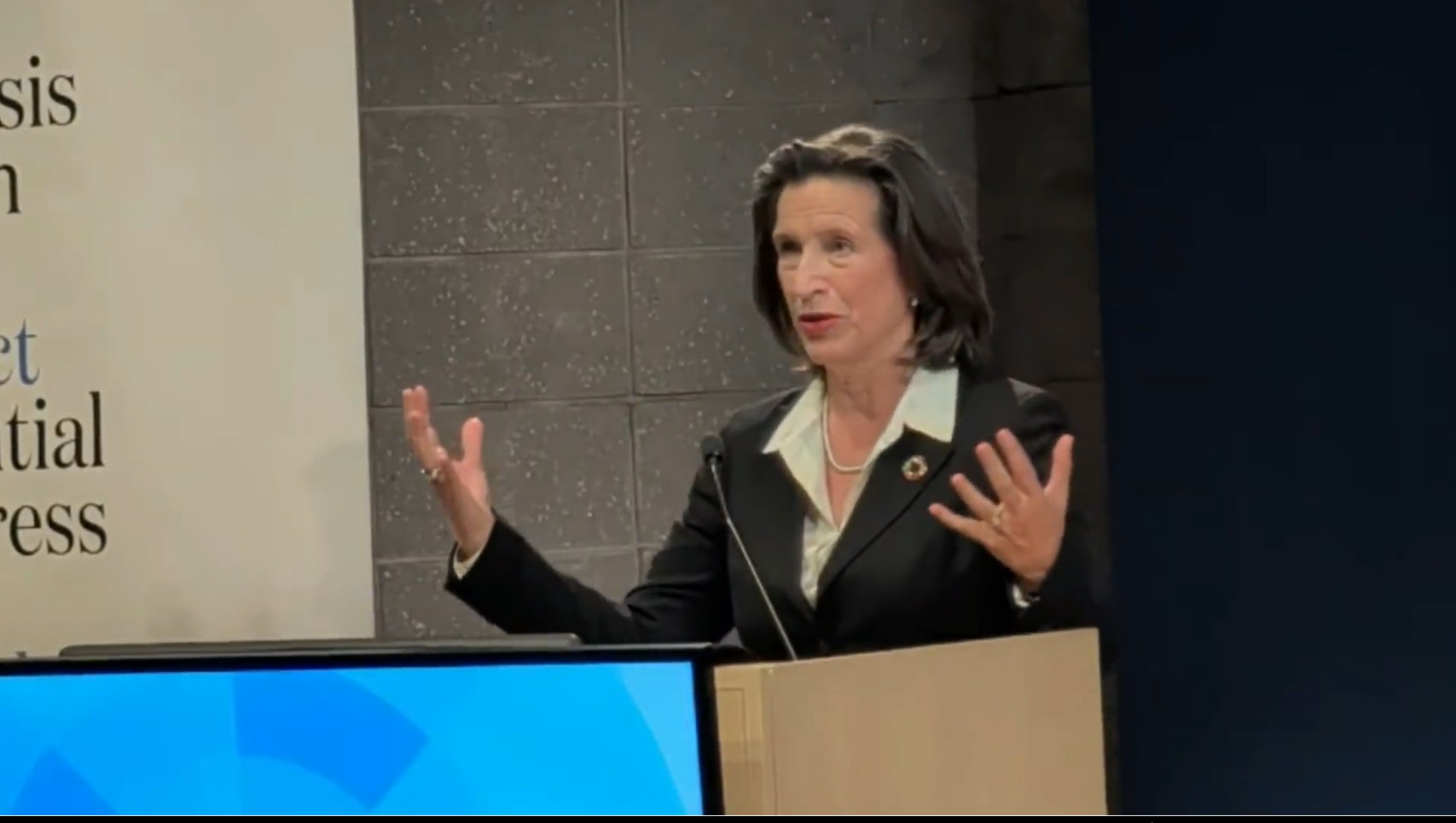
On October 21, 2026, the three-day “Communicating for a Better World” conference, jointly organized by Columbia University’s School of International and Public Affairs and the Ralph Bunche Institute for International Studies at the City University of New York, opened at The Forum at Columbia University in New York. Melissa Fleming, United Nations Under-Secretary-General for Global Communications, delivered remarks at the opening ceremony.
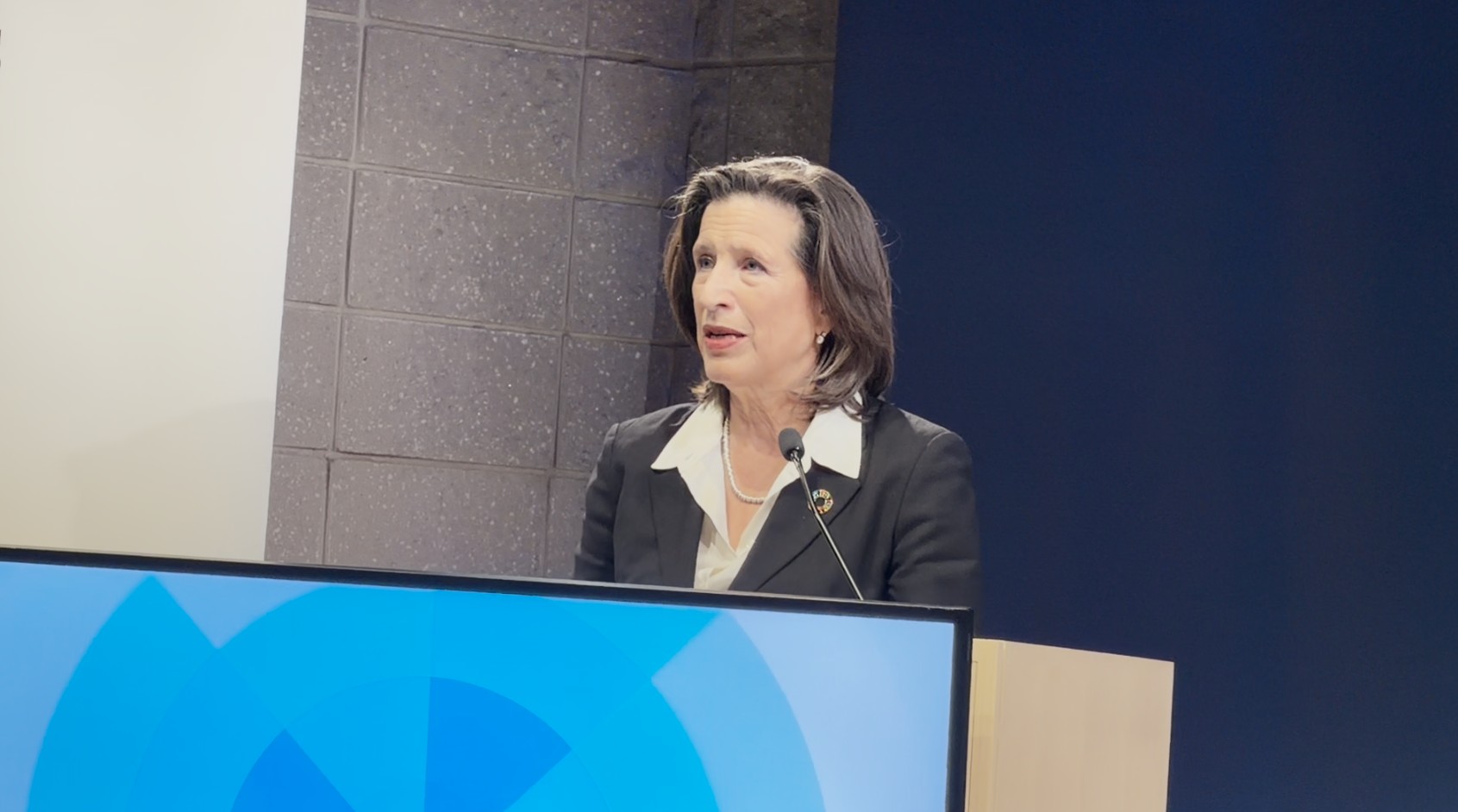

When the world’s suffering is repeatedly reduced to numbers, how can communication keep people engaged? When social media algorithms continually amplify anger, how can the public discern authentic voices in society? In her remarks at the “Communicating for a Better World” conference, Melissa Fleming, United Nations Under-Secretary-General for Global Communications, raised questions that deserve careful consideration by journalists and public communication professionals.
In Celebrity Media’s view, her central concern was how to rebuild understanding between people in an environment of information overload and eroded trust—and turn that understanding into a force for civic engagement.
Seeing the People Behind the Numbers
Fleming shared the story of an Afghan girl who had lost the opportunity to pursue an education. Afraid to use her real name, the girl had seen her hopes for an education and a career become unattainable dreams overnight. For Fleming, this voice was unforgettable because it brought a vast education and human rights crisis into focus through the specific, urgent challenges facing one young person.
She also reflected on her experience telling the story of Doaa, a Syrian refugee who survived a shipwreck. As the public grows numb to ever-rising refugee figures, one person’s experience can reopen a space for understanding and compassion.
This offers a direct lesson for journalism. Statistics help the public grasp the scale of a problem, while personal stories reveal how it changes an individual’s life. The media have a responsibility to connect the two: to present the broader facts while ensuring that the people affected have names, histories, and voices. Particularly when reporting on refugees, women, and children, journalists should avoid portraying them solely as passive victims and instead convey their aspirations, choices, and dignity.
Moving from “What Happened” to “What Can Be Done”
Fleming’s approach to communication centers on three questions: What happened? Why should we care? And what can we do next?
This approach highlights a common gap in public communication: audiences learn about a crisis and feel compassion, yet do not know how to respond. When people are moved time and again but see no possibility of change, concern can give way to helplessness.
Celebrity Media believes that journalism’s public value also lies in helping audiences understand what makes meaningful action possible. Which organizations are providing assistance? Which policies need improvement? Through what reliable channels can the public get involved? These questions should form part of the reporting. At the same time, calls to action require scrutiny and accountability, so that people know where their support goes and what it achieves. Only then can the hope fostered by communication rest on a practical foundation.
Loud Voices Amplified by Algorithms Cannot Substitute for Public Opinion
Fleming’s criticism of the social media information environment deserves particular attention. She noted that algorithms tend to reward content that stokes anger, fear, and prejudice, making the loudest voices appear to represent the majority.
Citing surveys on climate action, she explained that public support for taking action may be stronger than people assume it is. Someone willing to help bring about change may remain silent because they mistakenly believe they stand alone.
This observation reminds the media that online popularity cannot serve as a direct measure of social consensus. Heated arguments in comment sections and recurring extreme views must be examined within a broader social context. Through research, interviews, and fact-checking, news organizations should also represent people who may be less adept at attracting attention but whose views and actions help shape society.
Connecting People Who Want to Change the World Through Credible Communication
In her remarks, Fleming thanked a support network comprising scholars, students, journalists, diplomats, and communication professionals. This underscores the need for collaboration across professional and institutional boundaries to address today’s communication challenges.
For Celebrity Media, multilingual communication carries the same responsibility. As a report reaches different language communities, it should preserve factual accuracy, portray people fully, and retain the context of the issues as faithfully as possible, enabling audiences across cultures to understand the challenges they share.
Fleming’s remarks ultimately pointed toward a clear goal: helping people recognize that they are not alone in caring about peace, human rights, and the planet’s future. The media can create the conditions for these connections—drawing attention through authentic stories, deepening understanding through well-supported facts, and enabling participation through credible avenues for action. Communication of this kind can build lasting public trust beyond a fleeting moment of attention.